
Africa’s healthcare is changing fast. New technologies—from AI diagnostics to drone deliveries—are making care faster, smarter, and more personalized.
For high-net-worth individuals, executives, diplomats, and busy professionals who expect VIP-level care, the intersection of technology and premium services is creating new possibilities: seamless concierge experiences, faster referrals, private monitoring, and powerful continuity of care.
This post explains how tech and AI are transforming VIP healthcare across Africa, what’s already working, what’s coming next, and how to build trustworthy, equitable premium care without losing what matters most—human clinicians and patient safety.
The Big Picture — Africa’s Digital Health Moment
Africa is not “behind” in a single way—it’s leapfrogging. Mobile money, wide mobile uptake, and targeted start-ups have created fertile ground for digital health.
Governments and global health bodies now prioritize digital strategies that harness data, AI, and infrastructure investments to make systems resilient and people-centered.
The WHO’s Global Strategy on Digital Health (2020–2025, extended into the current period) has been a north star, encouraging countries to adopt person-centric digital health tools, governance, and ethical standards.
Why that matters to VIP care: strong digital foundations make it possible to deliver private, fast, and personalized services (secure electronic records, private tele-consults, near–real-time lab results, and dedicated care teams) while keeping data safe and auditable.
What “VIP Healthcare” Means in the African Context
VIP care is more than private rooms and fancy cafeterias. For high-value patients in Africa, it typically includes:
- Priority access to top specialists and shortened wait times.
- Continuity and oversight—a known physician or care team who coordinates every step.
- Concierge logistics—same-day transport, quick diagnostics, and home visits.
- Discretion and security—private channels, secure records, and controlled access.
- Outcomes and monitoring—remote monitoring, data dashboards, and proactive follow-up.
Technology magnifies each of these. AI can triage referrals to appropriate specialists. Digital platforms manage scheduling and billing. Drones or rapid logistics solve last-mile medicine delivery in remote areas. All of this can be wrapped in a premium white-glove service that still centers the patient-physician relationship.
Core Technologies Reshaping VIP Experiences
Electronic Medical Records + Data Platforms — the Nervous System
Modern VIP care needs one truth: a complete, accessible patient record. African healthtech companies are building EMRs and hospital management systems that work offline, on low bandwidth, and with local language support.
These platforms make fast referrals, consolidated histories, and smooth billing possible for private clinics and hospitals. Helium Health—one of the continent’s largest digital health providers—is a key example of a platform being used across hospitals to digitize records and automate workflows.
AI Diagnostics and Clinical Decision Support — the Smart Assistant
AI models—from imaging interpretation to predictive analytics—can surface issues faster, catch patterns that humans miss, and prioritize urgent cases. In Africa, AI has been trialed to assist with TB and cervical cancer screening, and to analyze smartphone images for screening tasks where specialized clinicians are scarce.
These tools, when validated locally, become powerful allies for VIP services: they speed up diagnosis and reduce unnecessary travel for second opinions.
Remote Monitoring and Wearables — Continuous Oversight at a Distance
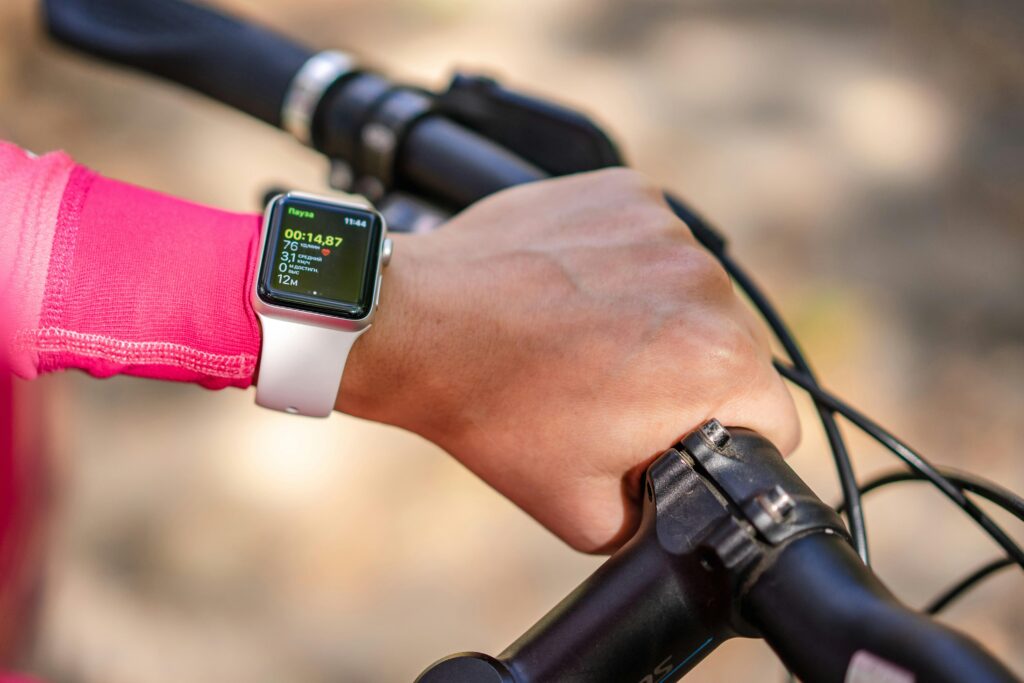
For executives and high-value clients who travel or prefer home care, wearable devices and remote monitoring platforms provide clinicians with a live feed of vital signs, medication adherence, and recovery metrics.
This enables true continuity of care: physicians can intervene early, adjust therapy remotely, or schedule an urgent in-person visit when necessary.
Logistics Tech and Drone Delivery — Speed Where Roads Slow
Zipline’s autonomous drone network has already changed how blood, vaccines, and emergency supplies reach clinics in Rwanda, Ghana, and beyond. Fast, reliable deliveries cut wait times for life-saving products and allow VIP services to guarantee supply, even in adverse weather or traffic conditions.
Zipline’s public-facing numbers—millions of deliveries and large autonomous miles flown— show scale and reliability that premium clinics can depend on.
Privacy, Security, and Local Data Centers — Trust Anchors
High-net-worth patients expect privacy. Investing in local data hosting, strong encryption, and governance is essential. The World Bank and private investors have moved heavily into African data center capacity to reduce latency and improve sovereignty—a structural shift that supports secure, AI-powered healthcare.
Real-World Players and Proof Points (African Success Stories)
Helium Health — Digitizing Clinics and Enabling Premium Workflows
Helium Health’s EMR and hospital suite have been adopted by scores of hospitals across West and East Africa. For VIP clinics, such platforms automate billing, keep private records synced across care teams, and feed analytics that measure outcomes and patient satisfaction.
Recent deployments include AI-enhanced modules to speed clinician workflows in Nigerian states.
mPharma — Smarter Pharma Supply and Affordability

mPharma has built supply-chain networks, bulk purchasing, and inventory platforms to reduce stockouts and lower costs in pharmacies across Ghana, Nigeria, and other markets. For VIP services, guaranteed access to quality medicines and controlled supply chains means faster care and a lower risk of counterfeit drugs.
Zipline — the Drone Logistics Backbone
Zipline’s model demonstrates how logistics tech can be deployed at a national scale for medical deliveries. When VIP hospitals need urgent blood, platelets, or specialty medicines, drone networks provide a consistent and fast channel—even into remote or traffic-choked urban zones.
Zipline’s expansion and government partnerships show drones are moving from pilots to core infrastructure in several countries.
Designing a VIP Experience Powered by AI — Practical Blueprint
If you run a private clinic, hospital, or care service and want to layer AI and tech while keeping care human, here’s a practical blueprint:
1) Start with a single source of truth (EMR + consented data)
Digitize records in a safe, local way. Ensure patients explicitly consent to data use for AI, analytics, and third-party services.
2) Validate AI locally before clinical use
Train/test AI models on local data or validated datasets. Bias and under-representation are real —tools built on non-African datasets can misdiagnose. Invest in local validation studies and clinician oversight.
3) Build premium logistics and redundancy
Combine traditional couriers with drone or rapid courier backup. For VIP plans, offer guaranteed delivery SLAs for meds and lab reagents.
4) Create a 24/7 clinical concierge team supported by AI triage
Use AI to triage inbound messages and route them to the right clinician. Humans must always oversee decisions. Offer in-person or rapid home visits as needed.
5) Offer remote monitoring packages with human oversight
Provide wearables or home kits with clear escalation pathways. Data should feed an on-call clinician dashboard. Alerts trigger human calls, not only automated messages.
6) Design privacy-first contracts and data storage
Host data locally where possible. Use clear legal agreements and limited access controls for VIP clients. Invest in certified data centers and regular audits.
7) Build alliances with public and private partners
Sign MOUs with national labs, logistics firms, and digital health platforms to ensure continuity of supply and rapid regulatory help.
Opportunities — What the Future Holds for VIP Healthcare in Africa
- Personalized medicine at scale: AI models trained on diverse African genomics and phenotypes could personalize therapy for chronic disease and cancer.
- Integrated travel health for frequent travelers: digital passports, pre-trip AI risk assessments, and rapid in-country response that follows the patient across borders.
- Hybrid home/hospital care models: short hospital stays with remote monitoring enable VIPs to recover in privacy without sacrificing safety.
- AI-enabled predictive care: analytics identify subtle risk signals (e.g., heart failure) before symptoms appear, letting clinicians intervene early.
- Cross-border care networks: secure data sharing and tele-consultation with specialists globally while preserving continuity with local physicians.
These are possible only when infrastructure (data centers and broadband), governance, and clinician trust grow together.
Risks, Biases, and Ethical Redlines — What VIP Services Must Avoid
Technology is powerful — and risky if deployed poorly. VIP health providers must be vigilant about:
- Algorithmic bias. Many AI tools are trained on non-African data sets. Without local validation, these models can underperform or misclassify. Always demand local testing.
- Data privacy and secondary use. VIP clinics often sit on sensitive data (diplomats, CEOs). Strict consent, limited sharing, and legal safeguards are non-negotiable.
- Over-automation. AI should assist, not replace, the clinician’s judgment. Automated triage must always have human review for any information beyond low-risk tasks.
- Equity creep. While premium services are legitimate, they should not undermine public health. Ethical operators must avoid diverting essential supplies from public systems during crises.
- Supply chain dependencies. Relying on single vendors for drones, AI, or cloud can create single points of failure. Design redundancy.
Regulation, Governance, and Public-Private Partnerships
National strategies (guided by WHO and global reports) emphasize governance, interoperability, and standards. The World Bank and other funders are investing in digital infrastructure, including data centers and national backbone projects.
These moves strengthen the ecosystem that premium care relies on, particularly for secure hosting and low-latency AI services. Public-private partnerships (PPPs) have become the practical route to scale logistics and digital platforms responsibly. Practical regulatory asks for VIP providers:
- Align AI use with national digital health strategies and WHO guidance.
- Publish model validation summaries for transparency.
- Participate in national interoperability frameworks.
- Support capacity-building, so that public systems also benefit.
Business Models for Premium Tech-Enabled Care
Several sustainable models have emerged:
- Subscription/retainer models — clients pay annual fees for 24/7 access, concierge services, and guaranteed logistics.
- Hybrid fee-for-service + membership — mix of per-visit fees and membership benefits (home visits, monitoring).
- Employer or embassy contracts — companies buy premium packages for executives or staff.
- Insurer partnerships — insurers underwrite remote monitoring and AI triage to reduce costly admissions.
For operators, margin depends on predictable logistics, low readmission rates (enabled by monitoring), and scalable digital platforms.
Case Study Vignette — A Day in the Life of a Tech-Enabled VIP Patient (illustrative)
Maria is a multinational executive based in Accra. She has a ChextrMD style concierge (continuity-of-care physician) on retainer. One morning, she feels dizzy.
- She messages the clinic app. AI triage flags “urgent” and routes to the on-call physician.
- The physician reviews her wearable vitals through a secure dashboard. Heart rate and BP confirm concern.
- The clinician schedules an immediate home visit. A drone delivers a point-of-care lab kit (or local courier in her city).
- Results stream to the EMR; AI suggests potential differentials. The physician orders a quick ECG at a partner hospital.
- The hospital’s specialist consults via teleconference. Meds are sent from the clinic’s pharmacy hub; mPharma ensures authenticity, and Zipline or a rapid courier guarantees same-day delivery.
- Maria recovers at home and is being monitored continuously for 72 hours. A follow-up appointment is scheduled with her primary physician for continuity.
This sequence depends on interoperable systems, validated AI, logistics partners, and a human clinician steering the care—exactly the model premium services are building.
How to Evaluate Technology Vendors and AI tools (Checklist for VIP Clinics)
Before integrating a new tech or AI product, validate:
- Local validation studies — has the model been tested on African populations? What were the results?
- Security certifications and local hosting options — where is the data stored? Can it be hosted locally?
- Interoperability standards — does the tool support HL7/FHIR or local standards for data exchange?
- Explainability and audit logs — does the AI provide human-readable reasoning and an audit trail?
- Clinical governance — is there clinician oversight and a clear escalation path for AI-flagged issues?
- Supply chain resilience — for logistics partners, what are backup options during outages or political disruptions?
- Regulatory compliance — is the vendor compliant with national digital health laws and WHO guidance?
Investment and Scaling — Where Funders are Putting Money
Investments are flowing into three areas that matter for VIP healthcare scalability. These capital flows strengthen the backbone that allows premium digital services to be reliable and secure.
- Data centers and cloud infrastructure — to host sensitive data locally and run AI workloads (major IFC/World Bank investments are evidence).
- Logistics networks — drone hubs, cold chain, and urban rapid couriers to ensure reliable supply. Zipline’s expansion and government contracts are a prominent example.
- Digital health platforms and interoperability — funding for EMRs, national registries, and health data exchange frameworks to reduce friction and improve continuity. WHO and World Bank strategy documents call this out as essential.
FAQs — Quick answers for Clinicians, Operators, and Patients
Q1: What does “VIP healthcare” really mean in Africa today?
VIP healthcare in Africa is not just about luxury rooms or private parking. It is about time, trust, and continuity. For most VIP patients, the real value is:
- Faster access to known doctors
- Fewer delays in tests and results
- One physician overseeing the full journey
- Quiet, discreet handling of health matters
- Care that adapts to travel and busy schedules
Technology helps by removing friction. AI speeds up triage. Digital records prevent repetition. Logistics tools make sure medicines and tests arrive on time. But the core stays the same—a trusted doctor who knows the patient well.
Q2: Is AI safe to use in African healthcare settings?
AI is a tool, and it can be safe only when used correctly. AI should never replace a doctor. Safety depends on local validation, clinician oversight, and transparent governance. In African healthcare, the safest use of AI is as a clinical assistant only after local testing, and not a decision-maker. It can:
- Highlight risks
- Sort urgent from non-urgent cases
- Support imaging or lab interpretation
- Reduce paperwork so doctors focus on people
The biggest risk comes when AI tools are trained only on data from Europe or North America. African populations are diverse. Without local testing, AI can miss signs or give wrong signals. AI should support experience, not replace it. That is why responsible clinics:
- Validate AI tools locally
- Keep doctors in charge of final decisions
- Monitor outcomes carefully
- Stop using tools that don’t perform well
Q3: Can AI really improve outcomes for VIP patients?
Yes — when paired with human oversight. For VIP patients, AI improves outcomes by:
- Catching issues early through pattern recognition
- Reducing wait times for referrals
- Supporting faster second opinions
- Enabling continuous monitoring instead of one-off visits
For example, AI-supported monitoring can detect small changes in blood pressure, heart rate, or glucose before symptoms appear. That allows doctors to act early, often preventing hospital admission. The key is early action guided by a known doctor, not automated treatment.
Q4: How does remote monitoring work for busy professionals and executives?
Remote monitoring allows doctors to watch health trends between visits, not just during appointments. It often includes:
- Wearable devices (heart rate, sleep, activity)
- Home devices (blood pressure, glucose, oxygen levels)
- Secure dashboards reviewed by clinicians
- Alerts when values move outside safe ranges
For busy professionals: You travel less, avoid unnecessary hospital visits, and your doctor stays informed even when you are abroad. But monitoring only works if someone is watching. VIP care includes human review, not just automated alerts.
Q5: Can drones deliver medicines to private homes?
A: In many countries, drone programs currently serve health facilities and clinics. Some services are expanding to home-delivery pilots, but regulations and safety rules vary by country. Zipline and similar firms primarily support health centers at scale.
Q6: How do VIP clinics keep data private?
A: Use local hosting when possible, strong encryption, strict access controls, and clear patient consent. Work with certified data centers and perform regular audits.
Q7: Will tech make care cold and impersonal?
A: Not if designed properly. The best models utilize AI to free clinicians from routine tasks, enabling them to devote more time to patient care. Continuity-of-care physicians remain central.
Choose Premium Care: Technology Means Smarter, Faster, and More Human
Technology and AI are not a magic wand. But when paired with strong governance, local validation, and a human-centered design, they enable VIP healthcare that is faster, safer, and more personalized across Africa. The triangle that will sustain this future is:

- Trusted clinicians who keep continuity-of-care and clinical judgment at the center,
- Robust digital infrastructure that secures and connects patient data, and
- Responsible AI and logistics that accelerate diagnosis, delivery, and monitoring.
For high-value patients and busy professionals, a tech-enabled VIP model can deliver peace of mind: A known physician, real-time oversight, guaranteed supply chains, and private, discreet service—all backed by auditable data and ethical design.
For clinics and operators: start with an EMR + consent framework, then pilot one validated AI workflow (e.g., triage or imaging assist) with clinician oversight. Build logistics partnerships for redundancy. Align with the national digital health strategy and publish validation outcomes.
For patients: if you’re seeking VIP care, choose providers who can show: local data hosting options, clinician governance over AI, validated technologies, and clear, written continuity of care arrangements with named clinicians.
Technology should enhance your relationship with your doctor—not replace it.